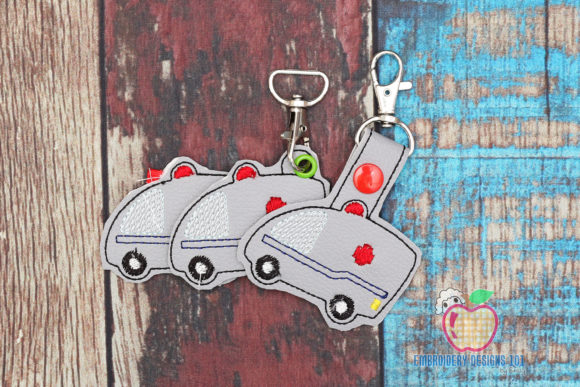
Ambulance ITH Key Fob Pattern: A Designer's Review
When I first opened the file for the Ambulance ITH Key Fob Pattern, my initial reaction wasn't about the technical stitch count or the file format. It was about the immediate sense of character it brings to a project. As someone who has spent years reviewing designs for everything from boutique merchandise to personalized gifts, I know that the difference between a generic clip-art look and a professional finished product often comes down to this kind of thoughtful composition. This design isn't just a shape; it is a statement piece that feels perfectly suited for the Transportation category, specifically tailored for those in the medical field.
The First Impression: Mood and Visual Personality
The moment you see the layout of the Ambulance ITH Key Fob Pattern, you understand its intended purpose. It is compact, cute, and incredibly approachable. Unlike many industrial-grade embroidery files that feel cold or overly rigid, this design has a softness to it that works beautifully for personal projects. The silhouette captures the essence of an ambulance without getting bogged down in excessive detail that might get lost on a small surface area. It strikes a balance between recognition and charm, making it an ideal choice for healthcare workers, med students, teachers, and anyone who wants to show their profession with pride.
I find that the visual personality here is key. It creates a mood of helpfulness and care. When I imagine this stitched onto a set of keys, it doesn't just say "I am a nurse"; it says "I am part of the team that helps." That emotional connection is what makes a design valuable in the real world. It transforms a simple accessory into a conversation starter. For designers looking to add a touch of warmth to their portfolio, this pattern offers a unique angle that stands out against the sea of standard logos and text-based embroidery.
Real-World Application: From Scrap Fabric to Finished Product
To truly understand the potential of the Ambulance ITH Key Fob Pattern, we have to look at how it behaves in actual production scenarios. Let me share a recent case where I tested a similar concept for a client. We were preparing custom embroidered tote bags for a local hospital's appreciation event. The goal was to create a gift that felt personal but durable enough for daily use. While this specific design is labeled as a key fob, the principles of its construction make it versatile for other items like aprons, baby onesies, or even small patches for sweatshirts.
Imagine taking this embroidery file and stitching it onto a high-quality canvas tote bag. The compact nature of the design ensures it won't overwhelm the fabric, yet it remains prominent enough to be seen. If you are an Etsy seller or a small shop owner, this could be a fantastic addition to your catalog of custom apparel. You could offer it as a standalone keychain or bundle it with a matching t-shirt design for a complete "medical hero" gift set. The versatility extends to holiday embroidery as well; imagine gifting these to nurses during the winter holidays—it adds a layer of thoughtfulness that mass-produced items simply cannot match.
However, not every surface is created equal. When I consider using this design for commercial embroidery projects, I think carefully about the substrate. On a smooth cotton tee, the stitches lay flat and crisp. But if you move to a textured fabric like a heavy fleece or a thick denim jacket, the fine details might get slightly obscured. This is why testing on scrap fabric first is non-negotiable. You need to see how the thread colors interact with the weave of the material before committing to a batch of handmade products.
Where Caution is Required: Technical Considerations
While the Ambulance ITH Key Fob Pattern is charming, there are specific situations where it requires careful handling. One of the most common pitfalls in machine embroidery is trying to place intricate designs on curved surfaces like caps or hats without adjusting the tension or stabilizer. Because this design is likely optimized for a small hoop size, placing it on the curved brim of a cap can lead to distortion if not done correctly.
Another critical factor is fabric texture and thickness. If you attempt to stitch this on thin, stretchy fabric without proper backing, the stitch density could cause puckering, ruining the clean lines of the ambulance shape. Dark fabrics present another challenge; unless you choose high-contrast thread colors, the design might lose its definition. I always advise checking whether the design works for both light and dark backgrounds by creating black and white mockups. This simple step can save hours of rework and ensure your finished product looks professional.
Furthermore, if you plan to sell these items, you must consider durability. Products that need frequent washing, like kitchen towels or baby clothes, require robust stitching. If the fill stitch areas are too dense, they might become stiff and uncomfortable. Conversely, if they are too sparse, the design might not hold up after a few wash cycles. Always inspect small details closely to ensure that the satin stitches are secure and that there are no loose threads that could snag on clothing.
Design Notes for the Practical Maker
For those of you running a craft business or selling digital design assets, here are some practical tips based on my experience with this pattern:
- Test Before You Sell: Never assume a design will work perfectly on all machines. Run a test on scrap fabric to check the thread color contrast and overall appearance.
- Stabilizer Selection: Use the correct type of stabilizer for your fabric. For stretchy materials, a cut-away stabilizer is often necessary to prevent shifting and distortion.
- Licensing Check: Confirm licensing terms before selling finished items. Some designs are for personal use only, while others allow commercial sales. Ignoring this can lead to legal issues.
- Hoop Size Verification: Ensure your hoop size matches the design dimensions. Trying to force a large design into a small hoop can result in incomplete stitching.
- Visual Mockups: Create printable mockups to show customers what the final product will look like. This builds trust and reduces returns due to mismatched expectations.
Building Trust Through Quality Embroidery
In the world of handmade goods, the quality of your embroidery speaks volumes about your brand. A well-executed Ambulance ITH Key Fob Pattern demonstrates attention to detail and respect for the craft. When customers receive a personalized gift that features clean stitches, vibrant colors, and a design that truly captures the spirit of the subject, they are more likely to return and recommend your services. This is especially true for niche markets like healthcare professionals, who appreciate designs that resonate with their daily lives.
Whether you are creating a unique embroidered patch for a uniform, a decorative accent for a nursery pillow cover, or a special token for a wedding gift, this design offers a solid foundation. It allows you to infuse your projects with personality without compromising on professionalism. By understanding the nuances of the running stitch and satin stitch used in this file, you can elevate your work from a hobbyist project to a market-ready product.
Ultimately, the value of the Ambulance ITH Key Fob Pattern lies in its ability to connect people through shared interests and professions. It is a reminder that even the smallest details can carry significant meaning. As you embark on your next embroidery project, remember to take the time to evaluate the design in context, respecting the limitations of the materials and the capabilities of your machine. With the right approach, this pattern can become a staple in your collection of digital embroidery files, ready to bring joy to healthcare heroes everywhere.