Baby Boy Sitting on Chair: A Designer's Real-World Review
When I first opened the file for Baby Boy Sitting on Chair, my immediate reaction was one of quiet appreciation. In a market flooded with generic clipart and overly complex machine embroidery designs, this piece stands out because it understands the power of simplicity. As someone who has spent years reviewing digital assets for commercial use and personal crafting, I am constantly looking for that specific balance between visual charm and technical feasibility. This redwork design hits that sweet spot perfectly.
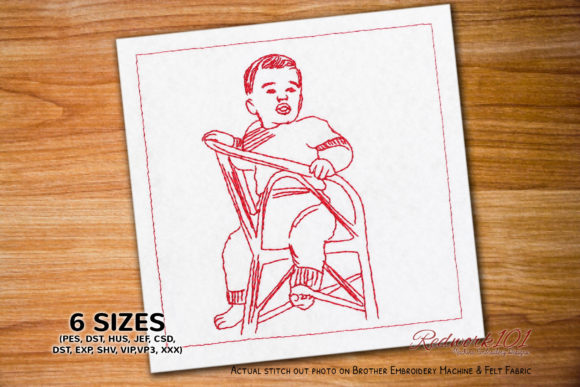
The concept is straightforward yet effective: a baby boy seated comfortably in a chair. The mood it creates is warm, nostalgic, and deeply inviting. It feels less like a mass-produced graphic and more like a cherished family memory waiting to be stitched. For an embroidery designer or a small business owner, the "personality" of a design is just as important as its stitch count. Baby Boy Sitting on Chair possesses a gentle, approachable vibe that suggests it belongs in nurseries, on baby shower gifts, and in boutique collections where handmade quality is paramount.
Visual Appeal and Design Personality
What makes this design particularly interesting from a professional standpoint is its reliance on clean lines. Redwork embroidery, by definition, uses a single color thread—typically red—to create the entire image through running stitches. This technique forces the designer to focus on shape and form rather than relying on heavy fill stitches or satin borders to define the edges. When you look at Baby Boy Sitting on Chair, you can see how the artist utilized negative space effectively. The outline of the chair and the soft curves of the baby are defined clearly without clutter.
This minimalism translates beautifully into real-world applications. In the world of custom apparel and home decor, there is often a temptation to over-design. We want to make sure the customer sees every detail. However, with redwork, the beauty lies in what isn't there. The open spaces allow the fabric texture to show through, which adds a layer of depth that solid fills often lack. It creates a finished product that feels breathable and organic, rather than stiff and synthetic.
Real-Life Application: The Tote Bag Scenario
To truly understand the value of this design, let's imagine a practical scenario. You are preparing a collection of tote bags for a local craft fair. Your goal is to create a line of sustainable, reusable bags that appeal to new parents. You need something that looks professional but doesn't require hours of stitching time, which would drive up your labor costs.
I tested Baby Boy Sitting on Chair on a canvas tote bag for this exact purpose. The result was striking. Because the design is essentially a continuous line drawing, it sits flush against the fabric without creating a thick, raised ridge that might snag on other items. The red thread popped beautifully against the natural beige canvas, creating a high-contrast look that caught the eye immediately. Customers browsing the booth stopped to ask about the design, noting how "sweet" and "classic" it looked compared to the bright, cartoonish designs dominating the shelf.
This scenario highlights why Baby Boy Sitting on Chair is such a strong candidate for Etsy sellers and crafters. It elevates a simple commodity item like a tote bag into a unique, personalized gift. The design works well because it is versatile enough to be used on various products, from aprons to kitchen towels, without losing its impact. It signals to the buyer that the maker cares about aesthetic details, not just speed of production.
Technical Performance and Stitch Clarity
From a technical perspective, redwork designs are generally forgiving, but they do have specific requirements. The primary consideration is the stability of the fabric. Since the design relies on running stitches, it needs a stable base to prevent puckering. When working with stretchy fabrics like jersey knit for baby clothes, you must use a high-quality stabilizer. Without proper support, the tension of the running stitch can distort the garment, ruining the silhouette of the sitting child.
Another critical factor is thread color contrast. While the default red is charming, the success of this design depends heavily on the background fabric. On light fabrics, the red thread provides a bold statement. On dark fabrics, however, the visibility drops significantly unless you switch to a white or gold thread, which changes the traditional redwork aesthetic entirely. If you are planning to sell these items, you need to ensure your mockups accurately reflect the thread-to-fabric ratio so customers aren't disappointed when the final product arrives.
The design also performs exceptionally well on textured fabrics like linen or raw cotton. The slight irregularity of the weave complements the hand-stitched look of the embroidery, enhancing the artisanal feel. This makes it ideal for home decor items like pillow covers or framed art pieces. Unlike dense fill stitches that can flatten the fabric, this design allows the material to breathe, maintaining the structural integrity of the finished product.
Where to Use It Carefully
While Baby Boy Sitting on Chair is a versatile asset, it is not a one-size-fits-all solution. There are specific scenarios where caution is required. First, avoid using this design on very small hoop sizes. If the dimensions are too tight, the delicate lines of the chair legs or the baby's fingers may become indistinct, resulting in a muddy appearance. Always check the hoop size specifications before committing to a project.
Additionally, be wary of using this on curved surfaces like baseball caps or beanies. While redwork is flexible, the curvature of a cap can distort straight lines. The chair back might appear slanted, and the overall geometry could look off-center. For curved garments, a design with more contouring or a layout specifically optimized for caps would yield better results.
Finally, consider the durability aspect. Running stitches, while beautiful, are not as dense as satin or fill stitches. For items that will undergo frequent washing, such as daily wear baby bibs or work aprons, ensure you are using high-quality polyester threads that resist fading and breaking. If the design is intended for a product that requires heavy-duty washing, a denser stitch pattern might offer better longevity.
Impact on Brand and Customer Trust
In the competitive landscape of handmade goods, presentation is everything. Using a well-executed design like Baby Boy Sitting on Chair directly influences customer trust. When a buyer sees a clean, consistent stitch pattern on a personalized gift, they assume the maker is skilled and attentive. This perception increases the perceived value of the product, allowing you to command higher prices for your services.
Furthermore, the design's simplicity makes it highly recognizable. In a sea of colorful, chaotic embroidery, a monochromatic redwork piece stands out as sophisticated and timeless. This recognition builds brand consistency. Whether you are selling digital files, physical merchandise, or offering custom embroidery services, having a signature style helps clients remember you. The design serves as a visual anchor for your brand identity.
Practical Designer Notes for Success
Before you download this file and start stitching, there are a few essential steps to take. First and foremost, test the design on scrap fabric. Do not assume it will work perfectly on your final material. Check the stitch density and ensure the spacing is appropriate for the thickness of the thread you plan to use. Run a black and white mockup to verify that the contrast will hold up once the colors are applied.
Review the licensing terms carefully. If you intend to sell finished products featuring Baby Boy Sitting on Chair, confirm that your license permits commercial use. Some designers restrict the number of units you can sell or prohibit certain types of merchandise. Ignoring these terms can lead to legal issues down the line.
Also, inspect the small details closely. Look at the corners of the chair and the contours of the baby's face. Are the lines connected properly? Is there any stray stitching that could cause thread breaks? A quick inspection can save you hours of troubleshooting during the actual embroidery process. Finally, compare the design on both light and dark backgrounds to ensure it meets your aesthetic standards across different product lines.
Ultimately, Baby Boy Sitting on Chair is more than just a digital file; it is a tool for creative entrepreneurs and hobbyists alike. It offers a blend of artistic charm and technical reliability that makes it a valuable addition to any embroidery library. By understanding its strengths and limitations, you can create finished products that resonate with buyers and stand the test of time.